




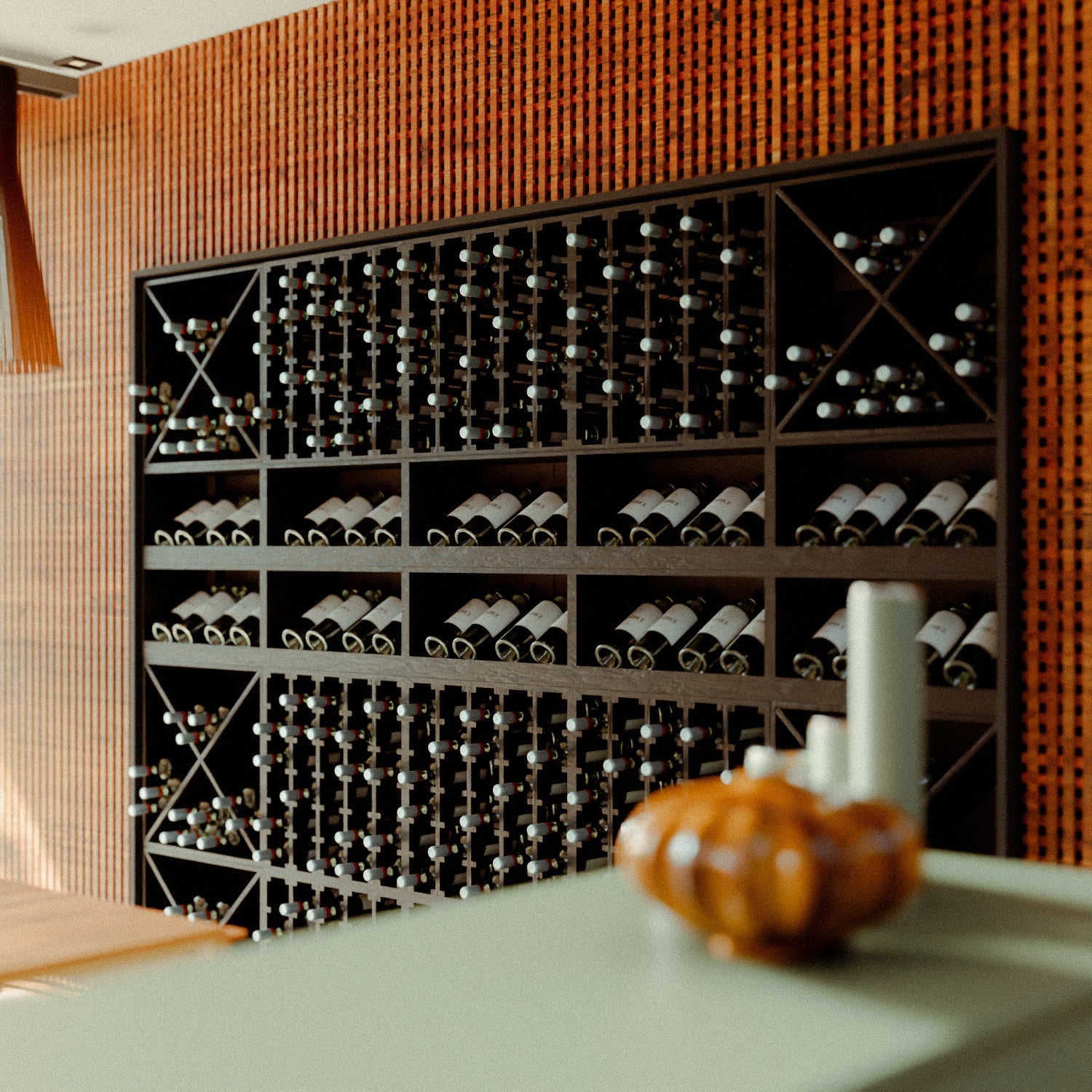
Walk into almost any wine cellar, wine shop, or well-designed wine rack, and you'll notice the same thing. The bottles are never standing straight up, and they're rarely lying fully flat either. They're resting at a slight angle, just off horizontal. This isn't a stylistic choice or a space-saving trick. It's one of the oldest, most consistently recommended practices in wine storage, and it comes down to a genuinely simple piece of physics happening inside every corked bottle.
Here's what's actually going on, and why it's worth paying attention to even if you're not storing wine for decades.
The Short Answer: It's About Keeping the Cork in Contact With the Wine
When a bottle stands upright, gravity pulls the wine away from the cork, leaving it exposed to the air inside the bottle's neck. Over time, a cork that isn't in contact with liquid can begin to dry out. As it dries, it loses some of its elasticity and its tight seal against the glass, which allows more air to make contact with the wine than intended.
Lay the bottle on its side, or tilt it just off horizontal, and the wine stays in constant contact with the underside of the cork. That contact keeps the cork moist and swollen against the glass, maintaining the seal it was designed to provide.
This is the entire principle behind angled and horizontal wine storage. It's not about the wine itself needing to be tilted. It's about protecting the one component, the cork, that's doing the actual work of keeping air out.
Why a Dried-Out Cork Actually Matters
A cork isn't a perfect, completely airtight barrier under any circumstances. Some slow, gradual oxygen exchange through a cork closure is actually part of how wine matures over time, and in small controlled amounts it can even contribute positively to how a wine develops. The problem isn't oxygen exposure itself, it's uncontrolled oxygen exposure.
A cork that dries out and loses its seal allows air in at a faster, less controlled rate than the wine was ever meant to experience. That accelerated oxidation is what leads to flat, dulled flavors, browning color in whites, and a wine that tastes noticeably past its best well before it should.
For collectors interested in the more technical side of this, ongoing peer-reviewed research into cork permeability and oxygen transfer is published by journals like OENO One, an open access journal dedicated specifically to viticulture and wine science, if you want to go further into the chemistry behind it than a general guide like this one can cover.
What About the Trapped Air Inside the Bottle?
There's a second, related detail worth understanding. Every bottle of wine has a small amount of empty space between the wine and the cork, generally referred to as ullage. When a bottle is stored at an angle rather than perfectly flat, that small pocket of air naturally settles toward the top of the bottle, away from direct, constant contact with the wine's surface.
This matters because a large surface area of wine sitting directly against trapped air accelerates oxidation more than a smaller, more contained pocket does. Storing the bottle at a slight angle, rather than dead flat, is a small adjustment that helps manage this more favorably, allowing the wine to develop more gradually and evenly over time rather than reacting unevenly with the air pocket sitting against it.
Does This Matter If I'm Not Aging Wine for Years?
This is a genuinely fair question, and the honest answer is that it matters less the sooner you plan to drink a bottle. If you're buying wine to drink within the next few weeks, cork moisture and slow oxidation simply won't have time to become a meaningful issue.
Where it does matter, even for casual collectors, is anywhere a bottle might sit around longer than expected. A gift bottle saved for a future occasion. A case bought on a good deal that ends up sitting for a year. A few special bottles set aside for a future celebration. None of these are formal cellaring situations, but all of them benefit from proper storage, simply because nobody can perfectly predict exactly when a bottle will actually get opened.
Storing bottles at the correct angle by default means you're never caught out by a bottle sitting longer than planned.

How This Shows Up in Wine Rack Design
This is exactly why well-designed wine racks, whether wall-mounted or floor-to-ceiling, hold bottles at a slight angle rather than standing them upright like books on a shelf. It's not purely an aesthetic decision, even though it does happen to look better than a row of upright bottles.
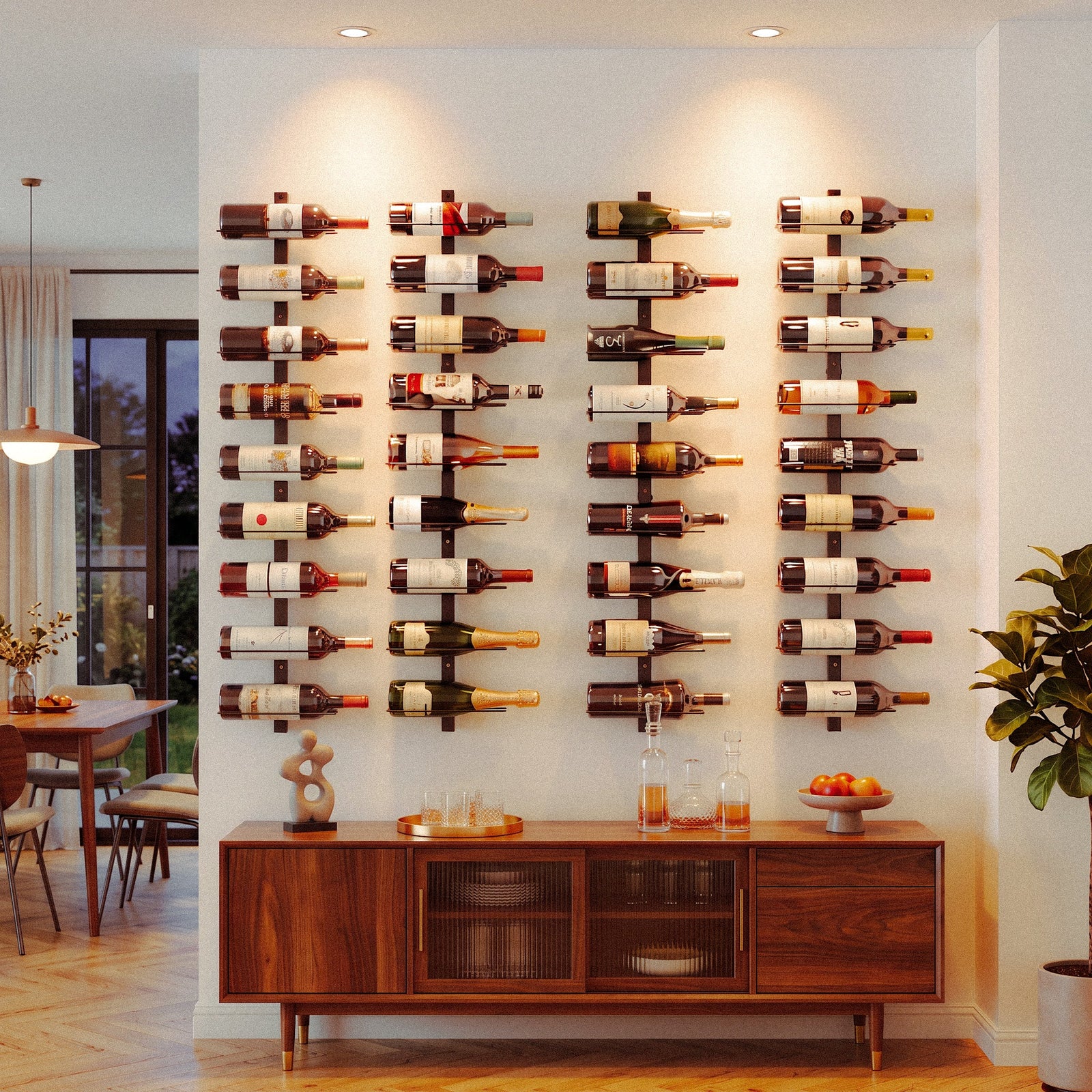
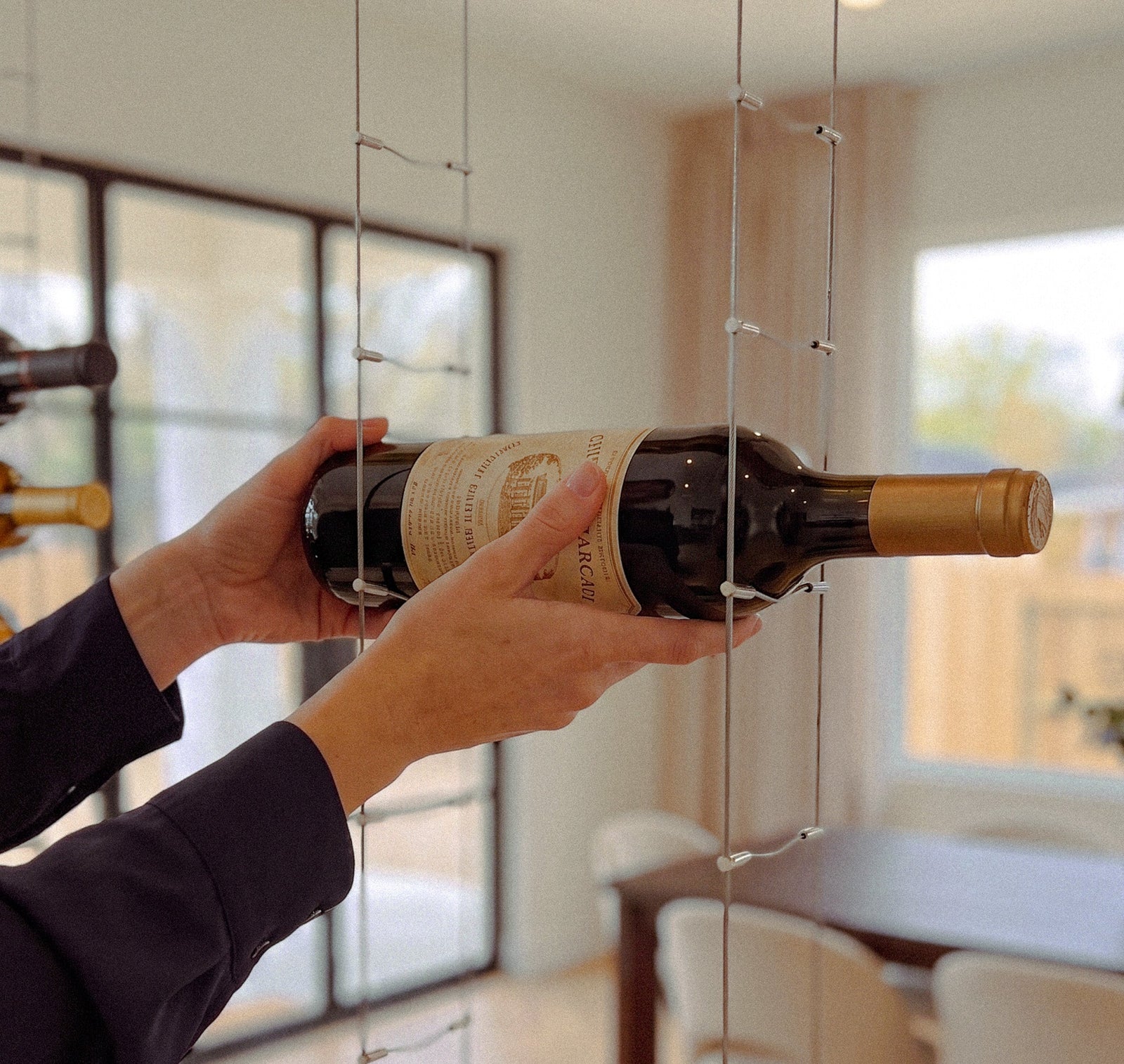
A wall-mounted wine rack holds each bottle individually at this angle, which is part of why the horizontal supports in a well-built system are positioned the way they are rather than being simple flat shelves. A floor-to-ceiling cable wine rack achieves the same result differently, using tensioned cable supports that cradle each bottle at the correct resting angle without needing a solid shelf underneath it at all.
Both approaches are solving the same underlying problem. They're just doing it with very different visual results.
Common Mistakes People Make With Storage Angle
A few genuinely common issues are worth flagging, since they undo the benefit of angled storage without people realizing it.
- Standing bottles fully upright "just for a little while." Short-term storage upright, like on a kitchen counter for a day or two, is fine. The problem is when "a little while" quietly turns into weeks or months.
- Storing bottles completely flat instead of at a slight angle. Fully flat isn't wrong exactly, but it means the ullage pocket sits directly along the full length of the wine's surface rather than settling toward one end, which isn't quite as favorable for long-term storage.
- Assuming screw-cap wines need the same treatment. Screw-cap closures don't rely on moisture contact the way natural cork does, so this specific concern is really a cork-specific issue rather than a universal wine storage rule.
Frequently Asked Questions
Do screw-cap wines need to be stored at an angle?
Not for the same reason. The cork-moisture concern is specific to natural cork closures. Screw-cap wines can generally be stored upright without the same oxidation risk, though many people still store them alongside corked bottles simply for consistency and space efficiency.
How long does it take for a cork to dry out if stored upright?
This varies significantly depending on humidity, temperature, and the individual cork itself, which is part of why it's hard to give a single reliable timeframe. As a general rule, the longer a bottle sits upright, the greater the risk becomes, which is why default angled storage is the safer habit regardless of how long you expect to keep a particular bottle.
Is horizontal storage the same as angled storage?
They achieve a similar outcome, keeping the cork in contact with the wine, but a slight angle rather than dead flat also helps manage where the small air pocket inside the bottle settles, which is why many purpose-built wine racks use an angled rather than perfectly horizontal position.
Does this apply to wine stored in a fridge?
Yes. The angle principle is about the cork's contact with the wine, not the temperature of the storage environment, so it applies whether a bottle is in a dedicated wine fridge, a cellar, or a wall-mounted rack in your dining room.
Final Thoughts
The angle your wine rack holds bottles at isn't a design detail added for looks. It's solving a genuine, well-understood problem: keeping the cork moist enough to maintain its seal, and managing how the small pocket of air inside the bottle interacts with the wine over time. Whether you choose a wall-mounted rack for a smaller collection or a floor-to-ceiling cable system for a larger one, both are built around this same principle, because it's the difference between wine that ages the way it's supposed to, and wine that quietly loses quality in the bottle before you ever get to enjoy it.




Leave a comment (all fields required)