




Somewhere between a few bottles on a countertop and a dedicated, climate-controlled cellar, there's a genuine decision most wine lovers eventually face. Do you need a whole room, or is a single striking wall actually enough? It's a bigger question than it first seems, because the two options solve genuinely different problems, and picking the wrong one means either overbuilding for a collection that didn't need it, or under-protecting bottles that genuinely did.
Here's how to actually work out which one fits your situation.
What a Wine Cellar Is Actually For
A true wine cellar isn't just a room with racks in it. What defines a genuine cellar is climate control, a consistent, managed temperature and humidity environment specifically built to protect wine over years, sometimes decades, of aging.
According to Wine Spectator's guide to proper wine storage, a genuine wine cellar maintains a consistent temperature around 55°F, along with humidity control and protection from light and vibration, conditions that go well beyond what a normal room in a house naturally provides. This is the entire point of a cellar. It's not decorative, it's functional infrastructure built specifically to slow and stabilize the aging process for wine you intend to hold for the long term.

What a Wine Wall Is Actually For
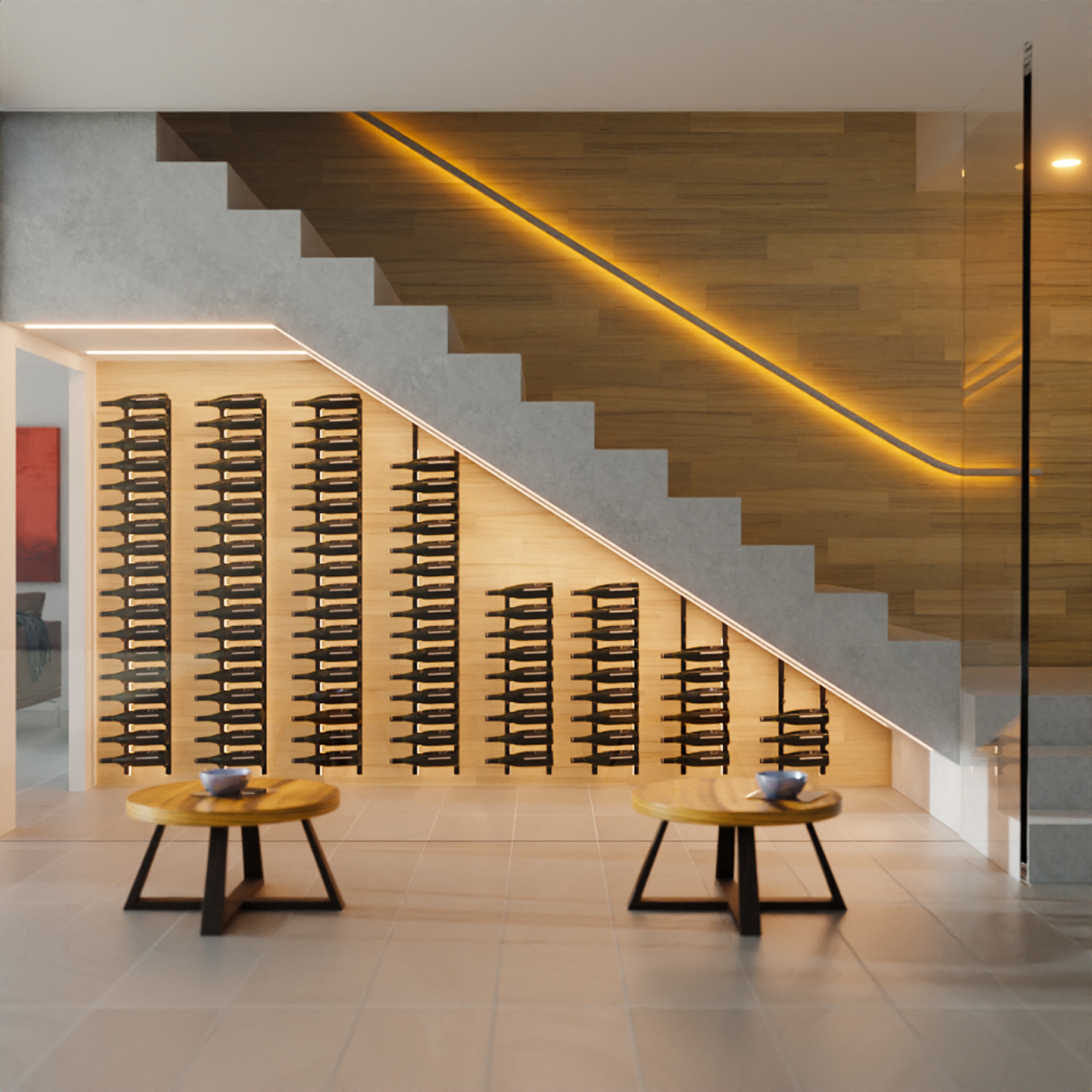
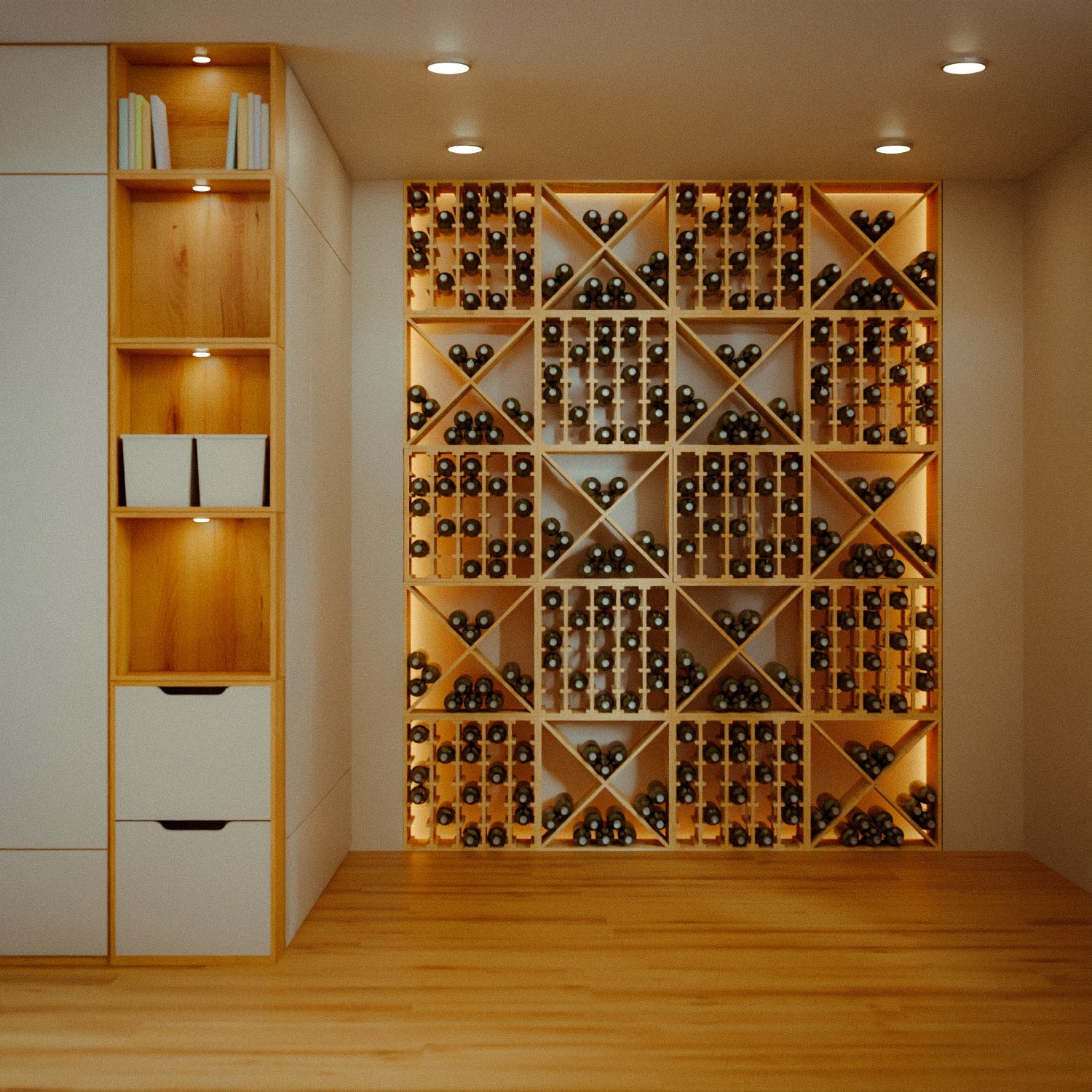
A wine wall, whether it's a wall-mounted system or a floor-to-ceiling cable installation, is solving a different problem entirely. It's about proper, correct storage and genuinely beautiful display within a normal living space, not manufacturing a controlled climate.
Bottles on a wine wall still benefit from being stored at the correct angle to keep corks moist, and from being kept out of direct sunlight and away from major heat sources, but they're living in your home's ambient conditions rather than a purpose-built environment. For wine you're planning to drink within the next few months to a couple of years, this is genuinely sufficient. For wine you're planning to hold for a decade or more, it's a meaningfully different situation.

The Real Question: How Long Are You Actually Holding These Bottles?
This is the single most useful question to ask yourself, more useful than collection size or budget. A wine wall handles short to medium-term storage well. A dedicated cellar exists specifically for long-term aging, where small, sustained temperature fluctuations compound over years in a way that simply doesn't matter over months.
Most home collections, even fairly serious ones, lean much more heavily toward the drink-within-a-few-years category than most people initially assume. If you're honest about how long your bottles actually sit before being opened, the answer to cellar versus wall often becomes clearer than it first seemed.
The Cost and Commitment Gap Is Bigger Than It Looks
A wine wall is a single, contained project. A wall-mounted system installs in under 30 minutes with included hardware. Even a floor-to-ceiling cable system, which requires more planning around structural backing, is still fundamentally a one-wall installation.
A genuine wine cellar is a construction project. It typically means dedicated insulated walls, a cooling system, humidity control, and often waterproofing or vapor barriers depending on the location, commonly a basement or a purpose-converted room. This isn't a weekend project, and the cost difference between the two options reflects that gap honestly.
Collection Size Isn't the Deciding Factor You Might Think
It's tempting to think a larger collection automatically needs a full cellar, but size and aging intent are actually two separate questions. A collector with 200 bottles they plan to drink within the next few years is genuinely well served by an expanded wine wall setup, more units, more capacity, but still living in a normal room. A collector with even a modest 30 bottles they're deliberately aging for a decade has a much stronger case for real climate control, regardless of how small that number looks on paper.
The deciding factor is really what you're doing with the wine, not how much of it you have.
Who Genuinely Needs a Full Cellar
A dedicated cellar makes real sense for serious long-term collectors, investment-grade wine, or anyone building a collection specifically around aging potential rather than near-term drinking. If protecting a wine's value or development over many years is a genuine priority, the controlled environment a cellar provides isn't a luxury, it's the actual mechanism that makes long aging viable in the first place.
Who's Genuinely Well Served by a Wine Wall
For most people, a wine wall is not a compromise, it's simply the right tool for what they're actually doing. If your collection is a mix of near-term drinking wine, a handful of special bottles, and a genuine appreciation for having it displayed well rather than hidden in a box, a wall-mounted or floor-to-ceiling system does exactly what you need, correct storage angle, good protection from light, and a genuinely striking visual feature in your home.
The Hybrid Path Many Collectors Actually Take
It's worth knowing this isn't strictly an either-or decision. Many collectors start with a wine wall, live with it, and get a real sense of how their collection and habits actually develop before ever considering a dedicated cellar. If a genuine long-term aging habit emerges later, that's the point at which a proper cellar becomes worth the investment, informed by real experience rather than a guess made in advance.
Starting with a wine wall is also simply the lower-risk decision. It's a fraction of the cost and commitment of a cellar, and nothing about choosing it now prevents building a dedicated cellar later if your collection genuinely calls for it.
Frequently Asked Questions
Can I start with a wine wall and add a cellar later?
Yes, this is genuinely common. A wine wall isn't a wasted investment if you later build a cellar, it simply shifts to housing your near-term drinking wine while the cellar handles long-term aging separately.
Does a wine wall damage wine that's stored too long?
Not inherently, but without climate control, a normal room is more exposed to seasonal temperature swings than a dedicated cellar. For wine you're planning to hold many years, this matters more than it does for wine you'll drink within a shorter window.
Is a floor-to-ceiling cable system closer to a cellar or a wall in terms of protection?
It's still a wall system in terms of environment, since it doesn't provide climate control. What it does offer is a genuinely dramatic architectural statement, which a cellar tucked away in a separate room typically doesn't.
How do I know if my current storage is good enough?
If your bottles are stored at the correct angle, out of direct sunlight, and away from major heat sources like an oven or a sunny window, a wine wall is genuinely sufficient for most collections focused on drinking within the next few years.
Final Thoughts
A wine cellar and a wine wall aren't competing versions of the same idea, they're built for genuinely different purposes. If you're aging serious bottles over many years, a proper climate-controlled cellar is doing real, necessary work. If you're storing and displaying a collection you're actively enjoying over the coming months and years, a wall-mounted wine rack or a floor-to-ceiling cable wall gives you correct storage and a genuine visual feature, without the cost and commitment of a full room conversion.




Leave a comment (all fields required)